Professional Electrician Course
The Professional Electrician Course is a comprehensive technical training program designed to equip students with the knowledge, practical skills, and professional competence required to work safely and efficiently in the electrical industry. Electricity is one of the most essential components of modern infrastructure, making qualified electricians highly valuable across residential, commercial, industrial, and construction sectors worldwide.
This course combines theoretical learning with extensive practical training, enabling students to understand electrical systems while gaining real-world experience using modern electrical tools, equipment, and testing instruments. The curriculum is designed according to current industrial practices and international safety standards to prepare trainees for successful careers both locally and abroad.
Students begin by learning the fundamentals of electricity, including electrical theory, voltage, current, resistance, power calculation, electrical measurements, wiring principles, circuit protection, grounding systems, and electrical safety regulations. The course also introduces learners to electrical symbols, engineering drawings, wiring diagrams, and electrical codes commonly used in residential, commercial, and industrial projects.
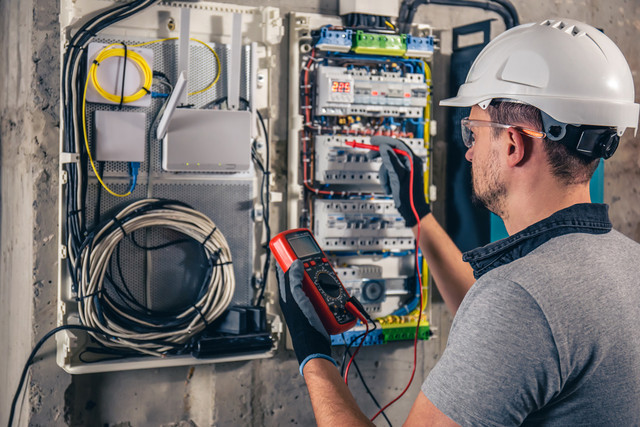
Practical training covers domestic wiring, commercial electrical installation, industrial electrical systems, conduit installation, cable laying, panel board wiring, switchgear installation, lighting systems, power distribution, motor connections, and electrical maintenance. Students receive hands-on experience installing and troubleshooting electrical systems under the supervision of experienced instructors.
The program places significant emphasis on fault detection and troubleshooting techniques. Trainees learn how to identify electrical faults, diagnose equipment failures, test circuits, repair damaged wiring, replace electrical components, and restore systems safely while minimizing downtime.
Safety is a major component of the course. Students receive comprehensive instruction on Personal Protective Equipment (PPE), electrical hazard prevention, lockout/tagout procedures, fire safety, first aid for electrical accidents, safe use of testing equipment, insulation testing, grounding practices, and emergency response procedures. Developing a strong safety culture is considered essential for every professional electrician.
Quality workmanship is maintained throughout the training. Students learn accurate measurement techniques, load calculation, cable sizing, circuit balancing, equipment installation standards, preventive maintenance procedures, and quality inspection methods followed in modern industries.
In addition to technical knowledge, the course develops communication skills, teamwork, workplace discipline, project planning, documentation, customer service, and professional ethics. These competencies significantly improve employability in competitive job markets.
Students complete several practical projects that simulate real industrial and commercial electrical installations. Continuous assessment and instructor feedback ensure they develop confidence, technical accuracy, and problem-solving abilities before entering professional employment.
Upon successful completion of the course, graduates are qualified to work as electricians in residential buildings, commercial complexes, factories, power plants, construction companies, maintenance departments, engineering firms, manufacturing industries, and infrastructure development projects. The course also provides a strong foundation for advanced electrical certifications and specialized technical training.
The Professional Electrician Course is ideal for beginners, technicians, maintenance workers, and anyone seeking a stable, respected, and high-demand technical profession with excellent career opportunities both nationally and internationally.
View course