Difference Between 1G, 2G, 3G, 4G and 6G Welding: A Complete Beginner's Guide
Difference Between 1G, 2G, 3G, 4G and 6G Welding: A Complete Beginner's Guide
Category: Welding Keywords: 1G Welding, 2G Welding, 3G Welding, 4G Welding, 6G Welding, Welding Positions, Welding Training, Welding Career
Difference Between 1G, 2G, 3G, 4G and 6G Welding: Everything You Need to Know
Introduction
Welding is one of the most valuable technical skills in today's industrial world. From skyscrapers and bridges to pipelines, power plants, ships, and automobiles, welding plays a vital role in building modern infrastructure. As industries continue to expand worldwide, the demand for skilled welders is growing rapidly.
If you are planning to become a professional welder, one of the first concepts you need to understand is welding positions. Beginners often think that 1G, 2G, 3G, 4G, and 6G refer to different welding machines or different welding processes. In reality, these numbers indicate the position in which the welding is performed.
Understanding these positions is important because employers expect welders to work efficiently in various situations. The more welding positions you master, the more valuable you become in the job market.
What Does the "G" Stand For?
The letter "G" stands for Groove Weld.
A groove weld joins two pieces of metal together through a prepared groove or joint. The number before the letter indicates the welding position.
For example:
- 1G = Flat Position
- 2G = Horizontal Position
- 3G = Vertical Position
- 4G = Overhead Position
- 6G = Fixed Pipe Position
Each position requires different levels of skill, coordination, and experience.
1G Welding – Flat Position
The 1G welding position is considered the easiest and is usually the first position taught to beginner welders.
In this position, the metal plate or pipe remains flat while welding is performed from the top. Since gravity naturally helps keep the molten metal inside the weld joint, controlling the weld pool becomes much easier.
Advantages of 1G Welding
- Easy to learn
- Faster welding speed
- Better weld penetration
- Smooth weld appearance
- Ideal for beginners
- Lower defect rate
Common Applications
1G welding is commonly used in:
- Steel fabrication workshops
- Manufacturing industries
- Training institutes
- Industrial production
Learning 1G creates the foundation for mastering more advanced welding positions.
2G Welding – Horizontal Position
The 2G welding position is more challenging than 1G.
In this position, the workpiece stands vertically while the weld is made horizontally.
Because gravity pulls the molten metal downward, the welder must carefully control heat, electrode angle, and travel speed to produce a quality weld.
Skills Required
- Arc control
- Heat management
- Electrode positioning
- Consistent travel speed
- Weld bead control
Industrial Applications
2G welding is frequently used in:
- Structural steel fabrication
- Pressure vessels
- Storage tanks
- Pipe fabrication
- Industrial construction
3G Welding – Vertical Position
The 3G welding position requires significantly more skill.
The weld is performed vertically either from bottom to top (Vertical Up) or from top to bottom (Vertical Down).
Since molten metal naturally wants to flow downward, maintaining a stable weld puddle becomes more difficult.
Professional welders must develop excellent coordination and steady hand movement to perform high-quality vertical welds.
Why 3G Is Important
Many construction projects require vertical welding because structural steel cannot always be rotated during installation.
This makes 3G welding one of the most important skills for professional welders.
4G Welding – Overhead Position
The 4G welding position is widely considered one of the most difficult plate welding positions.
In this position, welding is performed underneath the workpiece while gravity pulls molten metal directly toward the welder.
Because of this, welders must maintain excellent concentration, proper body positioning, and precise electrode control.
Challenges
- Heat rises upward
- Molten metal falls downward
- Higher safety risk
- Greater fatigue
- Requires advanced experience
Industries usually assign 4G welding tasks to experienced professionals.
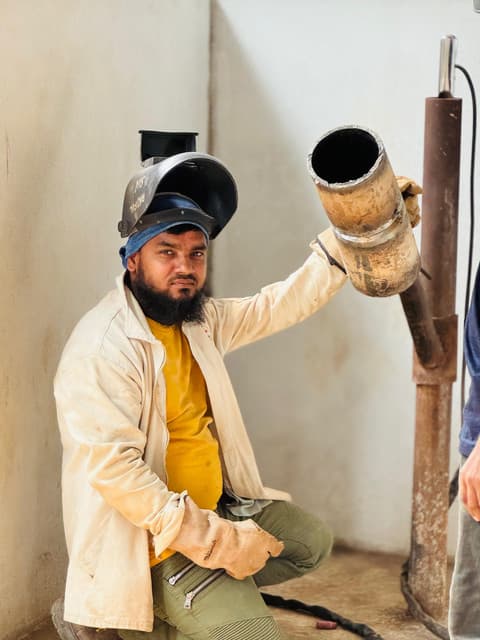
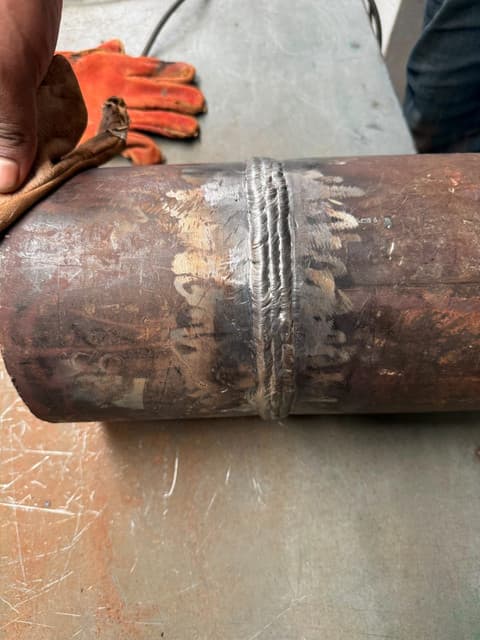
6G Welding – Fixed Pipe Position
Among all welding positions, 6G welding is considered the most advanced.
The pipe is fixed at approximately 45 degrees, meaning it cannot be rotated while welding.
Instead, the welder must move around the pipe while maintaining consistent weld quality from every angle.
Why Is 6G So Difficult?
The welder continuously changes body position while controlling:
- Arc length
- Torch angle
- Travel speed
- Heat input
- Filler material
- Weld penetration
Any mistake can affect the strength of the entire pipe joint.
Industries That Require 6G Welders
Professional 6G welders are highly demanded in:
- Oil & Gas
- Petrochemical Plants
- Refineries
- Power Plants
- Shipbuilding
- Pipeline Construction
- Pressure Vessel Manufacturing
- Offshore Projects
- Heavy Engineering
- Industrial Maintenance
Because of their specialized skills, certified 6G welders often receive higher salaries than general welders.
Comparison of Welding Positions
| Welding Position | Difficulty | Suitable For | | ---------------- | -------------- | ------------------------- | | 1G | Easy | Beginners | | 2G | Moderate | Industrial Plate Welding | | 3G | Medium to Hard | Structural Welding | | 4G | Hard | Advanced Plate Welding | | 6G | Very Hard | Professional Pipe Welding |
Which Welding Position Should You Learn First?
Every professional welder follows a learning sequence.
The recommended path is:
- Learn 1G
- Master 2G
- Practice 3G
- Improve with 4G
- Advance to 6G Pipe Welding
This gradual approach builds confidence while improving technical accuracy.
Skipping basic positions often creates learning difficulties later.
Why Multi-Position Welders Get Better Jobs
Modern industries rarely perform welding in only one position.
During real construction or fabrication work, welders may perform flat, horizontal, vertical, overhead, and pipe welding on the same project.
For this reason, employers prefer welders who can work confidently in multiple welding positions.
A multi-position welder offers greater flexibility, productivity, and value to the employer.
Career Opportunities
After mastering multiple welding positions, professionals can work as:
- Structural Welder
- Pipe Welder
- Fabrication Welder
- Industrial Welder
- Maintenance Welder
- Mechanical Technician
- Welding Inspector
- Welding Supervisor
- Quality Control Inspector
- Offshore Welder
Experienced welders also have opportunities to become trainers, contractors, or start their own fabrication businesses.
Why Professional Training Matters
Learning welding from experienced instructors is essential.
Professional welding training provides:
- Practical workshop experience
- Industry-standard equipment
- Safety education
- Machine operation skills
- Welding inspection knowledge
- International best practices
- Hands-on industrial projects
Proper training helps students avoid common mistakes and prepares them for real workplace challenges.
Final Thoughts
Understanding the difference between 1G, 2G, 3G, 4G, and 6G welding is the first step toward becoming a successful professional welder.
Each welding position develops different technical abilities and prepares welders for increasingly complex industrial tasks. Starting with 1G and progressing gradually toward 6G allows learners to build confidence, improve accuracy, and meet international industry standards.
As industries continue to grow worldwide, skilled welders remain among the most sought-after technical professionals. Whether your goal is to work in construction, manufacturing, shipbuilding, oil and gas, or overseas industrial projects, mastering multiple welding positions can significantly improve your career prospects and earning potential.
Investing in professional welding education today can open the door to long-term career success tomorrow.